
The rise of Artificial Intelligence has everyone talking. It can write poems, paint portraits, and even compose melodies in seconds. But as these machines get smarter, a nervous question hangs in the air: Is human creativity dying?
1. The Rise of the “Perfect” Machine
AI doesn’t “think” like we do; it identifies patterns. Because it has analyzed millions of human artworks and books, it knows exactly what we usually like.
Why this feels like a threat:
- The “Same-ness” Trap: Since AI learns from what already exists, it tends to produce things that feel familiar. If we rely on it too much, we might stop seeing weird, wild, or brand-new ideas.
- The Death of Effort: Real art often comes from struggle. When a computer does the “hard part” for us, we might lose the discipline it takes to master a craft.
- Information Overload: It’s hard for a human painter to get noticed when an AI can churn out 1,000 beautiful images in the time it takes to wash a paintbrush.
2. A Different Perspective: The “Power Tool” Theory
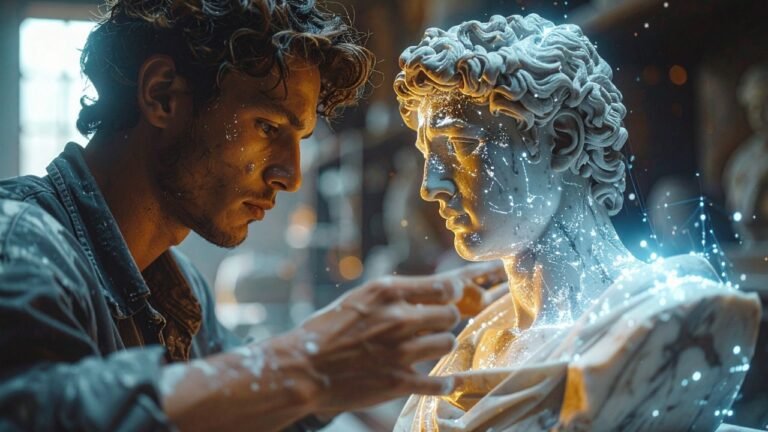
While some see a predator, others see a partner. Think of AI like a calculator for an architect—it doesn’t design the building, but it makes the math faster so the architect can dream bigger.
How AI might actually help us:
- Curing “Blank Page” Syndrome: AI can give you five starting ideas when you’re stuck, acting as a digital brainstorming partner.
- Handling the Boring Stuff: It can edit boring video footage or fix grammar, leaving humans more time to focus on the big story.
- New Forms of Art: Just as the camera didn’t kill painting (it just gave us photography), AI is creating a brand-new medium for people to explore.
3. The Human “X-Factor”
At the end of the day, AI lacks one thing: Soul. A machine can mimic the sound of a sad song, but it has never felt heartbreak. It can describe a sunset, but it has never felt the warmth of the sun on its face.
What AI can’t replace:
- Personal Experience: Your unique life story and your specific “flaws” are what make your work resonate with other people.
- True Innovation: AI looks backward at data; humans look forward at what could be.
- Intent: A machine creates because it was told to; a human creates because they have to.
Summary: Evolution, Not Extinction
Creativity isn’t dying—it’s changing. We are moving into an era where being “creative” isn’t just about technical skill, but about having a unique vision and knowing how to guide the tools at our disposal.